
A classic sahara desert marrakech trip requires at least three to four days to reach the majestic sand dunes of Erg Chebbi (Merzouga) or Erg Chigaga (M’Hamid). Spanning over 560 kilometres across the High Atlas Mountains, a typical journey features stops at the UNESCO-listed Ksar of Ait Benhaddou, the dramatic Dades Gorge, and lush palm oases. Travellers can choose between budget shared minibuses or private luxury 4×4 expeditions featuring luxury glamping, camel treks, and traditional Berber music under the desert stars.
Table of Contents
Planning a sahara desert marrakech trip is one of the most rewarding adventures in North Africa. Leaving the frantic alleyways of the Marrakech medina behind reveals a dramatic transition of landscapes: snow-dusted High Atlas peaks, ancient earthen fortresses, verdant date-palm valleys, and finally, the colossal golden dunes of the Moroccan Sahara.
Many UK travellers underestimate the sheer scale of the southern Moroccan desert. The true sand seas (ergs) do not sit just outside the city gates; reaching them requires traversing winding mountain passes and arid plateaus. Booking the right itinerary makes the difference between an exhausting transit endurance test and a life-changing expedition. This comprehensive guide details everything you need to know about routes, tour styles, costs, and essential packing advice.
Essential Route Planning for Your Sahara Desert Marrakech Trip
A successful sahara desert marrakech trip depends primarily on choosing the right route and allocating enough travel days. Rushing the journey across the Atlas range can leave you spending ten hours a day inside a vehicle without adequate time to enjoy the scenic highlights.
The High Atlas Crossing via Tizi n’Tichka
Every southern desert journey starting from Marrakech must first conquer the High Atlas Mountains. The route ascends through the dramatic Tizi n’Tichka Pass, which sits at an elevation of 2,260 metres above sea level.
- Mountain Road Conditions: The pass is fully paved and engineered with modern switchbacks, but sharp turns and steep drop-offs are constant. Motion sickness medication is recommended for sensitive travellers.
- Key Strategic Stops: Break up the mountain ascent with stops at roadside vantage points overlooking terraced Berber villages and traditional argan oil cooperatives.
- Seasonal Weather Shifts: Between November and March, snow can occasionally dust the highest peaks, creating sharp temperature drops compared to the mild climate of Marrakech.
Iconic Waypoints En Route to the Dunes
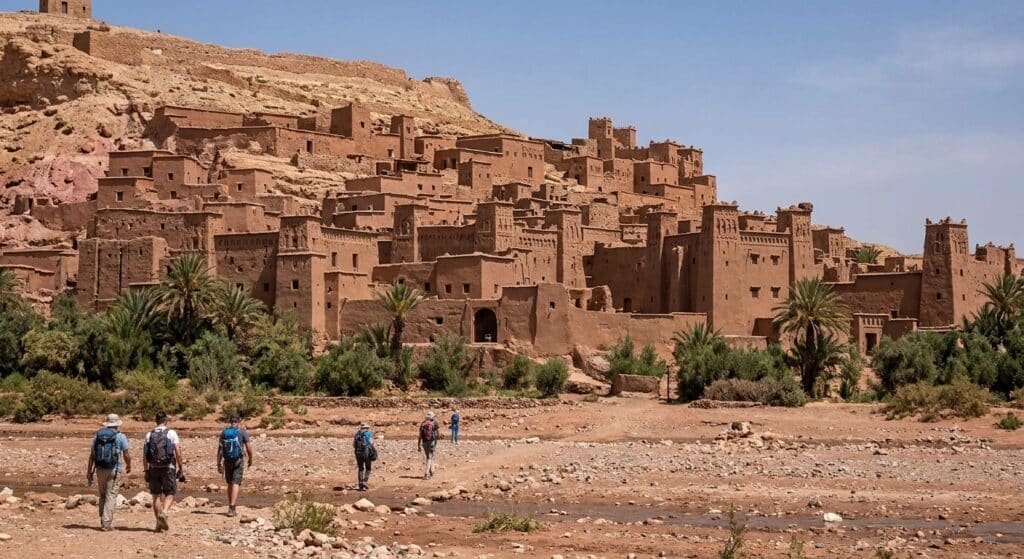
Breaking up the long transit to the Sahara allows you to explore southern Morocco’s rich architectural history:
- Ksar of Ait Benhaddou: A UNESCO World Heritage site, this striking 11th-century earthen clay fortress has served as the filming backdrop for Gladiator, Game of Thrones, and Lawrence of Arabia. Exploring its narrow alleys and climbing to the ancient granary (agadir) at the summit offers sweeping views across the Ounila Valley.
- Ouarzazate: Known as the “Hollywood of Morocco,” Ouarzazate houses major film studios (Atlas Studios) and the grand Taourirt Kasbah. It functions as the logistical gateway between the mountains and the desert.
- Dades Valley & Todra Gorge: The classic eastern route winds through the “Valley of a Thousand Kasbahs.” You will pass dramatic rock formations known as the “Monkey Fingers” in Dades before walking beneath the sheer 300-metre limestone cliffs of the Todra Gorge near Tinghir.
Allocating ample time along these mountain and valley routes transforms a standard transfer into an unforgettable sahara desert excursion from marrakech.
Choosing the Ultimate Morocco Desert Tour: Itineraries & Highlights
Selecting the best morocco desert tour format depends on your available holiday time, budget, and travel preferences. Desert circuits typically range from fast-paced 3-day loops to comprehensive 5-day private adventures.
Dades & Todra Valley
↓Erg Chebbi (Merzouga)
Grand Orange Dunes
Draa Valley (Palm Oasis)
↓Erg Chigaga (M’Hamid)
Wild, Remote Sand Sea
The Standard 3-Day / 2-Night Shared Circuit
The 3-day itinerary is the most popular option for travellers with limited time.
- Day 1 (Marrakech to Dades Valley): Depart Marrakech early (around 07:30), cross the Tizi n’Tichka pass, tour Ait Benhaddou, pass through Ouarzazate, and overnight in a traditional guesthouse in the Dades Valley or Tinghir (approx. 6–7 hours driving).
- Day 2 (Dades to Merzouga / Erg Chebbi): Explore Todra Gorge in the morning, stop in Rissani, and arrive at the edge of the dunes by late afternoon. Mount a camel for a sunset trek into your desert camp, followed by dinner and stargazing (approx. 4–5 hours driving).
- Day 3 (Merzouga back to Marrakech): Wake up early for the desert sunrise, return by camel or 4×4 to the base hotel for breakfast, and begin the long 9 to 10-hour drive back to Marrakech, arriving late in the evening.
The Relaxed 4-Day / 3-Night or 5-Day Circuit
For a significantly more comfortable pace, upgrading to a 4-day or 5-day morocco desert tour is strongly advised.
- Added Rest & Exploration: Spending an extra night allows for a full day in the Sahara without travel pressure. You can visit nomadic families in the black desert (reg), explore the Gnawa musician village of Khamlia, and try sandboarding down massive slip faces.
- Alternative Route Options: A 4-day tour allows you to return via the Draa Valley—Morocco’s longest river valley lined with millions of date palms—or continue onwards to Fez through the Ziz Valley and Middle Atlas cedar forests rather than doubling back to Marrakech.
What to Expect on an Authentic Morocco Desert Safari
Embarking on a morocco desert safari is far more than just a road trip; it is an immersive sensory experience rooted in Saharan hospitality and Berber traditions.
Sunset and Sunrise Camel Trekking
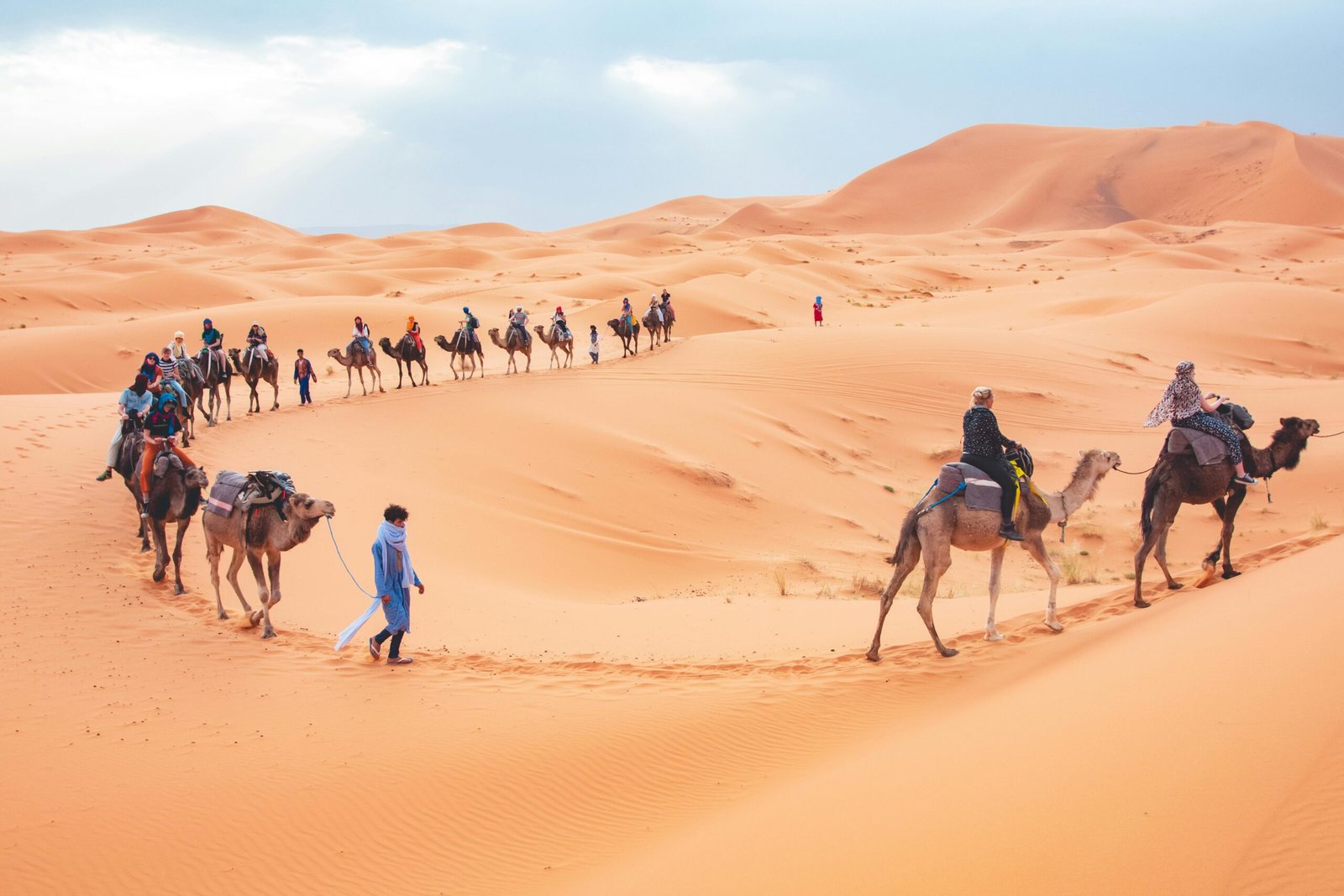
Riding a camel (dromedary) across the shifting sands remains the quintessential desert ritual.
- The Journey Out: Caravans typically set off roughly 90 minutes before sunset. Local Berber camel handlers lead the line across the ridges as the sand shifts from vibrant gold to deep ochre and violet.
- Mounting & Riding Technique: Camels stand up back-legs first, causing a sudden forward and backward pitch. Hold the metal handlebar firmly and lean back slightly to stay balanced.
- The Sunrise Experience: Morning treks offer completely pristine sand dunes with zero footprints from the day before, accompanied by crisp, cool morning air.
Luxury Glamping vs. Traditional Standard Camps
Accommodations during a morocco desert safari vary widely based on comfort requirements:
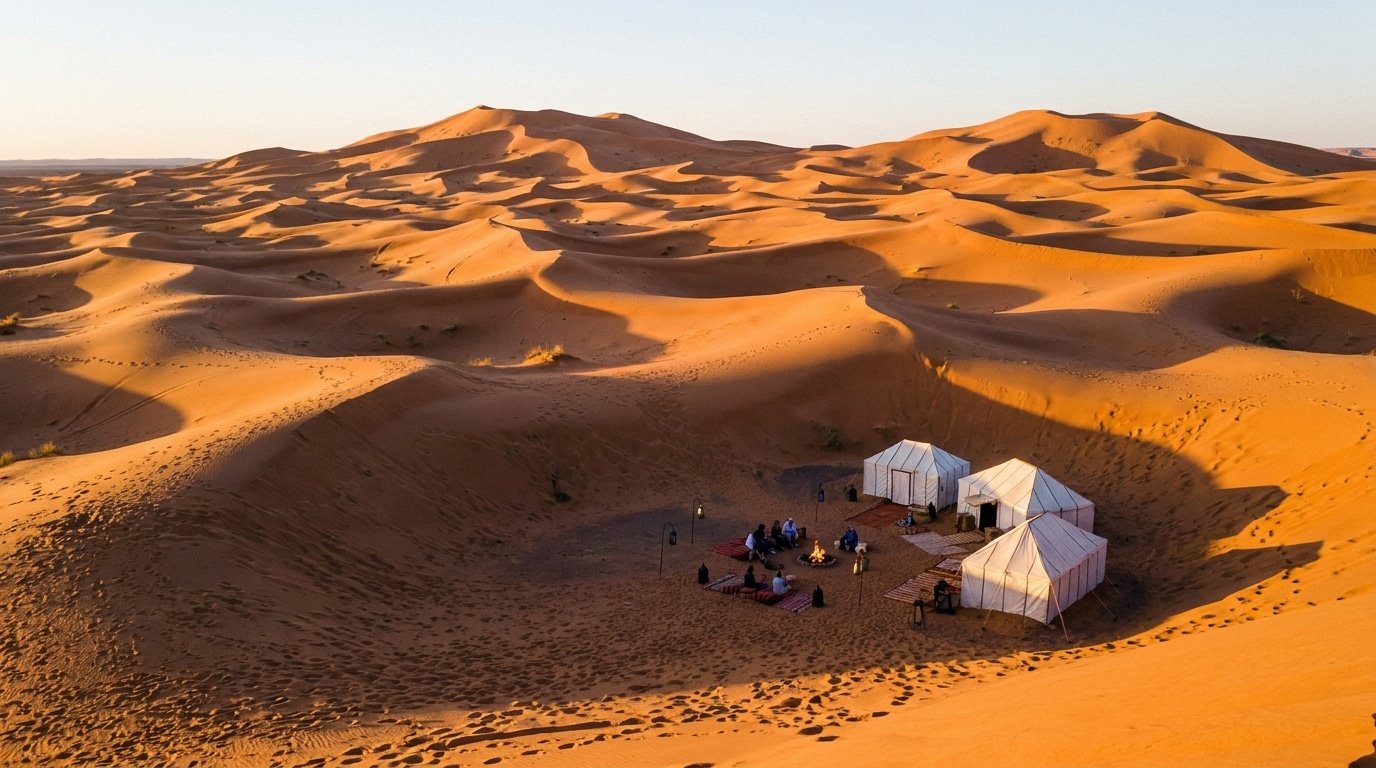
- Standard Desert Camps: Feature traditional goat-hair tents pitched closely together. Sleeping setups include mattresses on raised frames with heavy blankets. Bathroom facilities are typically shared in a central communal block with basic running water and toilets.
- Luxury Desert Camps: Provide expansive private canvas suites equipped with king-sized beds, authentic Berber carpets, private en-suite porcelain flush toilets, and hot water showers powered by solar generators. These camps usually include private outdoor seating areas, bespoke dining, and dedicated charging stations for electronics.
Nightly Campfires and Stargazing
After a dinner of slow-cooked lamb or vegetable tagine, guests gather around a central open campfire. Local camp staff perform traditional Saharan music using darbuka drums and acoustic instruments, inviting guests to join in the rhythm. Due to the complete absence of light pollution in the Sahara, the night sky reveals the Milky Way, shooting stars, and constellations with extraordinary clarity.
Comparing the Best Marrakech Desert Trips and Erg Destinations
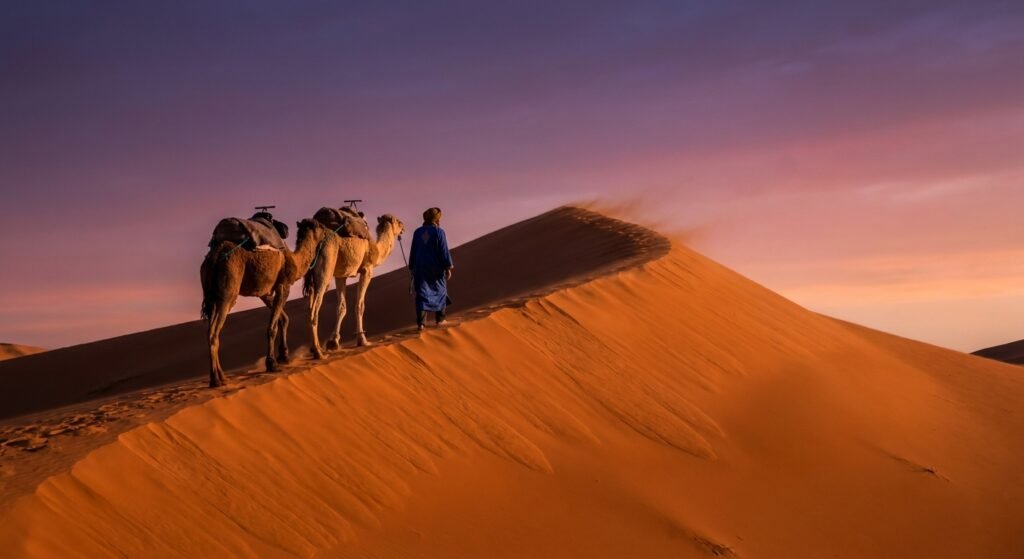
When researching marrakech desert trips, it is vital to distinguish between the various desert landscapes in southern Morocco. Not all deserts are filled with the sweeping orange sand dunes seen in travel magazines.
| Destination | Distance from Marrakech | Drive Time (One Way) | Landscape Type | Recommended Duration |
| Erg Chebbi (Merzouga) | ~560 km | 9–10 hours | Grand orange sand dunes (up to 150m high) | 3 to 4 Days |
| Erg Chigaga (M’Hamid) | ~500 km | 9–10 hours (inc. 2h off-road) | Wild, remote sand sea (up to 300m high) | 3 to 4 Days |
| Zagora Desert | ~360 km | 6–7 hours | Flat, rocky stone desert (reg) with small dunes | 2 Days (Not recommended) |
| Agafay Desert | ~40 km | 45 minutes | Barren white clay & stone hills (No sand dunes) | Day Trip or 1 Night |
Erg Chebbi (Merzouga): Accessible Grandeur
Erg Chebbi is the most famous dune field in Morocco. The sand sea measures 28 kilometres long and up to 7 kilometres wide, with individual dunes rising over 150 metres high. Its primary advantage is accessibility: paved roads lead right to the village of Merzouga at the foot of the dunes. This makes it ideal for travellers wanting luxury desert camps with modern infrastructure and reliable electricity.
Erg Chigaga (M’Hamid): The Untamed Wilderness
For adventurous travellers seeking absolute isolation, Erg Chigaga represents the rawest Saharan experience. Located south of Zagora past the town of M’Hamid, this massive sand field stretches for 40 kilometres and features dunes reaching heights of nearly 300 metres. Reaching Erg Chigaga requires a two to three-hour off-road journey across dried salt flats (playas) in a 4×4 vehicle. There are no hotels or paved roads here—only remote luxury and traditional camps nestled directly among the giant ridges.
Agafay Stone Desert: The Day-Trip Alternative
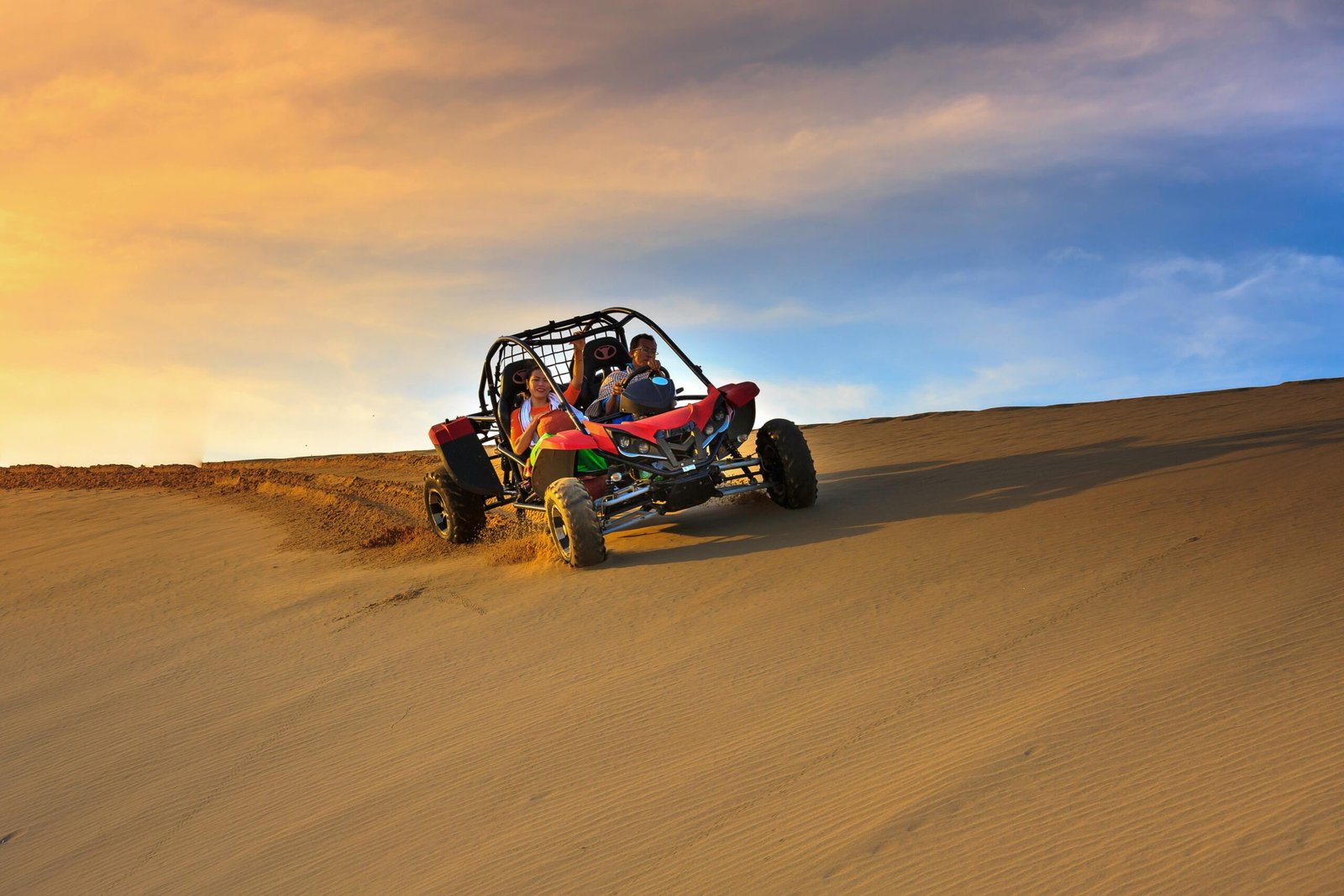
If your holiday itinerary cannot accommodate three full days of driving, the Agafay Desert serves as an accessible alternative. Located just 45 minutes southwest of Marrakech, Agafay is a stone desert (reg) featuring rolling, barren white hills that overlook the High Atlas Mountains. While it lacks golden sand dunes, it offers luxury glamping camps, camel rides, quad biking, and fine dining under the stars without the 20-hour round-trip drive. Many travellers choose this option when comparing shorter marrakech desert tour.
Booking a Sahara Desert Excursion from Marrakech: Costs and Logistics
Securing a reliable sahara desert excursion from marrakech requires balancing transport comfort, group size, and transparent inclusions.
🎒 Desert Expedition Checklist
- ✅ Pashmina / Cheche: Essential for blowing sand
- ✅ Warm Fleece: Cold desert nights (drops to 0°C–5°C)
- ✅ Power Bank: Limited electrical outlets in standard tents
- ✅ Cash (MAD): Small change for tips and roadside cafes
- ✅ Closed Shoes: Sturdy trainers for walking on hot sand
Budget Shared Tours vs. Private 4×4 Expeditions
- Shared Minibus Tours (£80 – £150 per person): These budget tours utilise 14 to 17-seater air-conditioned minibuses. They are cost-effective for solo travellers and backpackers. However, seating is tight, stops are rigid, and groups are often steered toward tourist-trap roadside restaurants and shops.
- Private 4×4 Expeditions (£300 – £800+ per vehicle/group): Travelling in a dedicated Toyota Land Cruiser or luxury Mercedes V-Class van provides complete itinerary flexibility. You can request photo stops at will, bypass crowded gift shops, interact one-on-one with your English-speaking Berber driver, and arrive at the dunes ahead of large tour buses.
Essential Packing Strategies for Extreme Climates
The Sahara experiences dramatic diurnal temperature swings. Daytime temperatures can reach 35°C–40°C in warmer months, while nighttime temperatures routinely plummet to 0°C–5°C during winter (December to February).
- Clothing: Pack lightweight, breathable linen or cotton long sleeves to protect against the daytime sun, along with a windproof jacket and heavy fleece for the evening campfire.
- Headwear: Purchase a traditional Saharan headscarf (tagelmust or cheche) in Ait Benhaddou or Rissani. The cotton wrap effectively shields your face, ears, and neck during sudden sand gusts far better than a baseball cap.
- Electronics Protection: Fine Saharan sand is invasive. Keep camera lenses, phones, and chargers inside sealed ziplock bags when not in use.
Planning an unforgettable journey into southern Morocco requires realistic expectations regarding driving distances, terrain, and itinerary pacing. Investing in a three or four-day trip ensures you experience the real Sahara at Erg Chebbi or Erg Chigaga without spending your entire holiday confined to a minibus. By balancing thrilling activities like dune boarding and camel trekking with quiet moments under the Saharan night sky, your desert expedition will stand out as the definitive highlight of your Moroccan travels.
Frequently Asked Questions
Can you do a day trip to the Sahara Desert from Marrakech?
You cannot do a day trip to the true Sahara Desert from Marrakech because the actual sand dunes of Erg Chebbi and Erg Chigaga are located over 500 kilometres away, requiring at least nine to ten hours of driving each way across the High Atlas Mountains. However, you can visit the nearby Agafay stone desert on a day trip, located just 45 minutes from Marrakech, which offers barren rocky landscapes, camel rides, and desert camp dining.
Is there a 2-day trip to the Sahara Desert from Marrakech?
There are 2-day tours advertised to the Zagora desert, but they do not take you to the real sand seas of the Sahara. Zagora features flat, rocky plains with minimal sand dunes. A 2-day trip requires spending roughly seven hours in a vehicle each day for a brief stay. To experience the towering sand dunes of the Sahara at Erg Chebbi or Erg Chigaga, you need a minimum of three to four days.
How far is the Sahara Desert from Marrakech?
The Sahara Desert dunes of Erg Chebbi in Merzouga are approximately 560 kilometres from Marrakech, taking around 9 to 10 hours of driving time. The wild dunes of Erg Chigaga near M’Hamid sit roughly 500 kilometres away, taking about 9 to 10 hours, including two hours of off-road terrain. The journey requires crossing the High Atlas Mountains via the Tizi n’Tichka pass before descending through southern valleys toward the dunes.
How much is a trip to the Sahara Desert?
A 3-day budget shared group tour to the Sahara Desert generally costs between £80 and £150 (€90 to €170) per person, including basic transport, standard camp accommodation, dinners, and breakfasts. A mid-range to luxury private 3-day tour typically ranges from £300 to £700 (€350 to €800) per person depending on group size, vehicle comfort, and luxury glamping upgrades with private en-suite facilities.
How much does a Merzouga desert tour cost?
A standard 3-day shared group tour to Merzouga (Erg Chebbi) costs around £90 to £130 per person with basic tent accommodation. Mid-range private tours typically cost between £250 and £450 per person for small groups, while high-end luxury private expeditions featuring five-star desert glamping camps, private 4×4 transport, and bespoke guided excursions range from £500 to over £1,000 per person.
Ready to explore the golden sands of the Sahara? Browse our verified selection of private and small-group desert expeditions today to secure your luxury camp under the stars before peak seasonal dates sell out.