
An atlas mountains day trip from marrakech offers the perfect escape from the intense heat and chaotic souks of the city. You can expect to hike through verdant walnut groves in the Imlil Valley, share traditional mint tea with local Berber families, and admire North Africa’s highest peaks. Whether you want a relaxed valley walk or plan to undertake serious Toubkal trekking, booking a licensed local guide and arranging private 4×4 transport ensures a safe, unforgettable mountain adventure.
Table of Contents
Trading the unpredictable grey skies of the UK for the vibrant alleys of the Red City is a fantastic holiday strategy. Navigating the bustling medina, exploring ancient palaces, and bargaining in the souks provides an incredible sensory overload.
The intense energy of the city requires a counterbalance. Looking south from the medina rooftops, the snow-dusted peaks of the High Atlas range completely dominate the horizon. This massive geological barrier divides the Mediterranean climate of the north from the arid Sahara Desert in the south. Escaping the city walls to explore these high-altitude Berber villages provides a drastically different, serene perspective on Moroccan culture and landscape.
Planning Your atlas mountains day trip from marrakech
Executing a flawless atlas mountains day trip from marrakech requires understanding the local transport infrastructure and mountain geography. The journey from the flat plains of the city into the steep, winding valleys of the High Atlas takes roughly 90 minutes.
Setting out early is the golden rule for mountain travel. Most professional transport services aim to leave the city centre between 08:30 and 09:00 AM. Departing early helps you beat the intense midday sun on the exposed hiking trails. It also ensures you secure the best tables at the riverside cafés before the large tourist coaches arrive.
When arranging transport for your atlas mountains day trip from marrakech, travellers generally have three primary options:
- Private 4×4 or Minivan: Hiring a private vehicle with an English-speaking driver offers maximum flexibility. You dictate the pace, request spontaneous photo stops at scenic overlooks, and travel in air-conditioned comfort.
- Organised Group Tours: These operate daily using 14-seater minibuses and represent a highly cost-effective choice for solo travellers. They follow a rigid schedule and often include stops at local argan oil cooperatives along the route.
- Shared Grand Taxis: Budget-conscious adventurers can head to the Bab Rob taxi rank in the city to catch a vintage Mercedes grand taxi heading to Asni or Imlil. You purchase a single seat, and the car only departs when all six passenger spots are filled.
To maximise your atlas mountains day trip from marrakech, pre-booking a licensed local mountain guide is highly recommended. These local experts navigate the unmarked mule tracks safely and facilitate genuine interactions with the mountain communities you pass through.
Choosing the Perfect atlas mountains trip from marrakech
Curating your ideal atlas mountains trip from marrakech means selecting a valley that matches your physical fitness level and scenic preferences. The mountain range is vast, featuring several distinct valleys that cater to different types of visitors.
The Imlil Valley: The Hiker’s Paradise
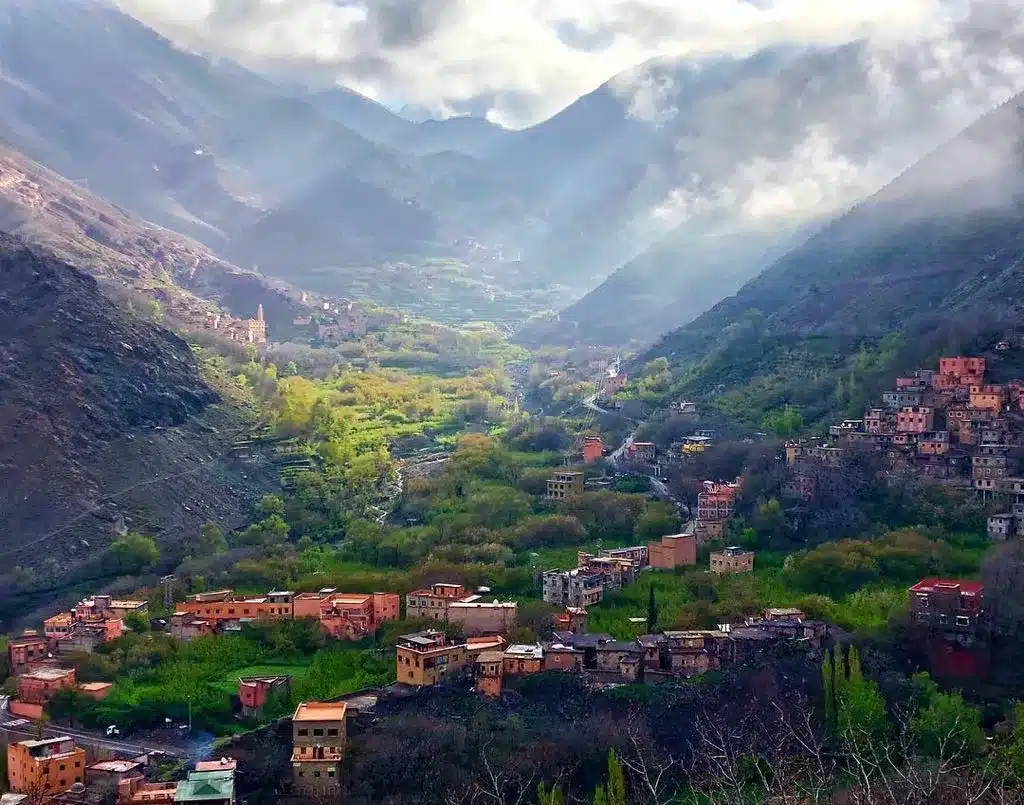
Sitting at an elevation of 1,800 metres, Imlil serves as the premier gateway for serious outdoor enthusiasts. The air here is noticeably thinner and crisper than in the city below. The village is surrounded by steep terraced fields of barley, ancient walnut trees, and cherry orchards.
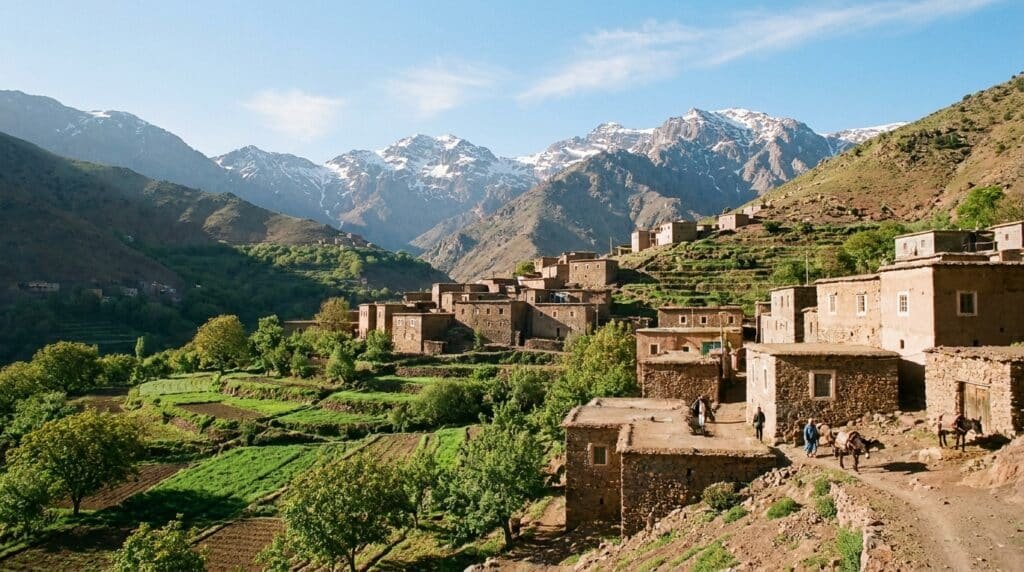
An atlas mountains trip from marrakech targeting Imlil usually involves hiking up to the higher village of Aroumd (Armed). This spectacular settlement features traditional earthen houses stacked tightly against the mountainside, offering sweeping views of the Toubkal massif. The trails are rocky and require moderate fitness, but the alpine scenery is unparalleled.
The Ourika Valley: Riverside Relaxation
For travellers seeking a less strenuous atlas mountains trip from marrakech, the Ourika Valley provides a lush, accessible alternative. Located just 45 minutes south of the city, this verdant valley follows the rushing Ourika River.
The primary attraction here is the hike to the seven waterfalls of Setti Fatma. Local cafés set their colourful plastic chairs and tables directly in the shallow river water. Enjoying a slow-cooked chicken and lemon tagine while dipping your feet in the cool mountain stream is a quintessential Moroccan weekend experience.
The Ouirgane Valley: Hidden Tranquility
Ouirgane sits at a lower altitude (around 1,000 metres) and offers a distinctly different, Mediterranean feel. The landscape features rolling red-earth hills, olive groves, and a beautiful shimmering reservoir. Taking an atlas mountains trip from marrakech to Ouirgane is perfect for gentle horseback riding, easy nature walks, and escaping the heavier tourist crowds found in Ourika and Imlil.
What is the best time for an atlas mountains trip from marrakech?
The best time for an atlas mountains trip from marrakech is during the spring (March to May) or autumn (September to November). During these months, the daytime temperatures are mild and perfect for hiking, while the valleys are vibrant with blooming wildflowers or changing autumn foliage. Winter visits offer spectacular snow-capped views but require heavy thermal clothing, while peak summer (July and August) can be exhaustingly hot on exposed mountain trails.
What to Expect on a trip to atlas mountains from marrakech
A well-planned trip to atlas mountains from marrakech delivers much more than just beautiful landscape photography. It offers profound insight into the resilience and hospitality of the indigenous Amazigh (Berber) people.
The High Atlas communities operate on a completely different rhythm than the chaotic urban centres. You will notice the distinct architectural style immediately. The houses are constructed using local stone and pisé (rammed earth), featuring flat roofs that blend seamlessly into the rugged cliff faces. This traditional construction method naturally insulates the homes against the freezing winter snows and scorching summer heat.
Cultural immersion is a cornerstone of any trip to atlas mountains from marrakech.
- The Mint Tea Ceremony: Hospitality is deeply ingrained in Berber culture. You will likely be invited into a local home or guesthouse to partake in a traditional tea ceremony. The host expertly pours the sweet, mint-infused green tea from a great height to create a frothy top, symbolising a warm welcome.
- Agricultural Traditions: Walking along the irrigation channels (seghias), you will see farmers tending to terraced plots using methods passed down through generations. Mules remain the primary mode of transport for goods, navigating the steep, narrow tracks where vehicles cannot pass.
- Artisan Crafts: Many villages have small cooperatives where women weave intricate, brightly coloured wool rugs. Purchasing directly from these cooperatives supports the local mountain economy and provides you with an authentic souvenir.
To respect the local culture during your trip to atlas mountains from marrakech, dress modestly. Both men and women should wear clothing that covers the shoulders and knees, even during the warmer summer months.
Essential Gear for your atlas excursion marrakech
The environment transitions rapidly from the shaded alleys of the souk to the exposed, high-altitude sun of the mountains. Packing correctly for your atlas excursion marrakech guarantees your comfort and safety on the trails.
The High Atlas mountains experience dramatic diurnal temperature shifts. You might start your morning hike shivering in crisp mountain air, only to be sweating under an intense sun by midday.
Here is the essential packing list for a successful atlas excursion marrakech:
- Sturdy Footwear: Leave the sandals at the riad. You need closed-toe walking shoes or dedicated hiking boots with aggressive grip. The trails are notoriously loose, rocky, and uneven.
- Layered Clothing: Pack a breathable base layer, a warm fleece or mid-layer, and a lightweight windproof/waterproof jacket. You can easily peel layers off as you generate body heat during the ascent.
- Sun Protection: The UV index at high altitudes is severe. Bring a wide-brimmed hat, polarised sunglasses, and high-SPF sunscreen.
- Hydration System: Carry a minimum of two litres of water per person. A reusable water bottle or hydration bladder is essential.
- Daypack: A comfortable 20-30 litre rucksack is necessary to carry your extra layers, water, camera, and any souvenirs you purchase along the way.
If you plan to visit during the winter months (December to February), your atlas excursion marrakech will require proper thermal base layers, warm gloves, and a heavy down jacket. The temperatures in Imlil frequently drop below freezing once the sun dips behind the mountain ridges.
The Ultimate Adventure: A Guide to Toubkal trekking
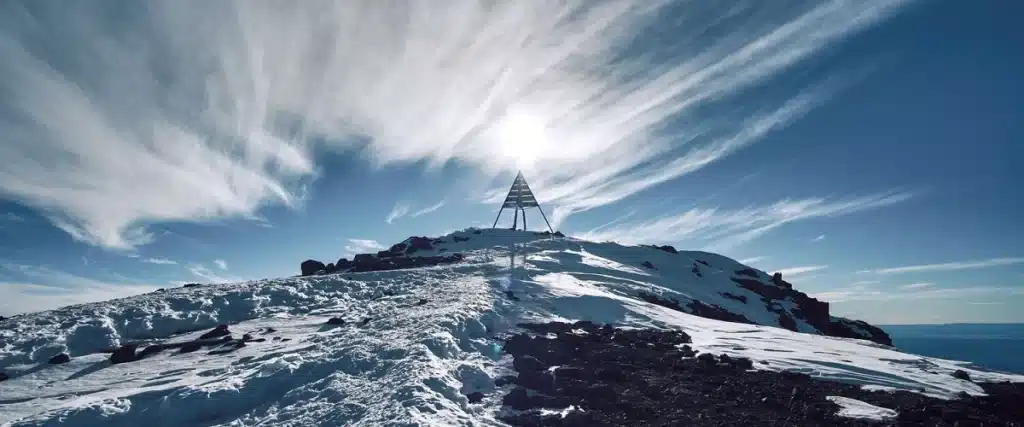
For the truly adventurous UK holidaymaker, simple day hikes might not satisfy the craving for a physical challenge. Toubkal trekking represents the pinnacle of North African mountaineering, drawing hikers from across the globe to conquer the continent’s second-highest peak.
Mount Toubkal (Jbel Toubkal) stands at a commanding 4,167 metres (13,671 feet). While the ascent is considered a non-technical trek—meaning you do not need ropes, harnesses, or rock-climbing experience—it remains a strenuous and physically demanding endurance test.
A standard Toubkal trekking itinerary requires two full days to complete safely.
- Day 1: The Ascent to Base Camp. The journey begins in Imlil. You hike steadily upward for roughly five to six hours, passing the holy shrine of Sidi Chamharouch. The trail gains approximately 1,400 metres in elevation before you reach the Refuge du Toubkal (or Les Mouflons) at 3,207 metres, where you will eat a carb-heavy dinner and sleep in shared dormitory bunks.
- Day 2: The Summit Push. Climbers typically wake at 4:00 AM, strapping on headlamps to begin the steep, scree-covered climb in the dark. The goal is to reach the iconic metal summit pyramid just as the sun rises over the Sahara Desert to the south. After celebrating, you face a punishing, knee-jarring descent all the way back down to Imlil in a single day.
Since late 2018, the Moroccan government has mandated that all foreigners undertaking Toubkal trekking must be accompanied by a licensed local mountain guide. You cannot pass the police checkpoints on the trail without one. This regulation ensures hiker safety and provides vital employment for the local mountain communities.
Altitude sickness (Acute Mountain Sickness) is a genuine risk during Toubkal trekking. Symptoms include severe headaches, nausea, and dizziness. To mitigate this risk, stay incredibly hydrated, ascend at a slow and steady pace (following your guide’s rhythm), and avoid alcohol the day before your trek.
If you are attempting Toubkal trekking between November and May, the upper slopes will be covered in deep snow and ice. You must rent crampons and an ice axe from the gear shops in Imlil. Your mandatory guide will teach you how to use this equipment safely if you have no prior winter mountaineering experience.
Escaping the immediate boundaries of the city unlocks the true geographical majesty of southern Morocco. Prioritising an excursion into the high-altitude Berber villages or tackling the summit of North Africa’s highest peak will profoundly elevate your understanding of the local culture and landscape. By preparing properly for the changing climates, hiring licensed local guides, and respecting the indigenous communities, you ensure your mountain adventure is both wildly thrilling and deeply rewarding.
Frequently Asked Questions
How difficult is climbing Mount Toubkal?
Climbing Mount Toubkal is a strenuous, non-technical trek that requires a very good level of cardiovascular fitness and physical endurance. While you do not need ropes or rock-climbing skills, the steep ascents, loose scree trails, and high altitude (4,167 metres) make it a demanding two-day challenge that should not be underestimated.
How much does a mountain guide cost in Morocco?
A licensed local mountain guide for Atlas mountain hikes typically costs between 300 to 500 Moroccan Dirhams (£24 to £40) per day, depending on the group size and the specific trekking route. Hiring a guide is legally mandatory for any tourist attempting the Mount Toubkal ascent and highly recommended for general valley hikes.
Can you get altitude sickness in the Atlas Mountains?
You can absolutely get altitude sickness in the High Atlas Mountains, particularly when trekking above 2,500 metres towards the Toubkal base camp and summit. Symptoms include headaches, nausea, and shortness of breath; you can prevent this by ascending slowly, drinking abundant water, and descending immediately if symptoms become severe.
Ready to conquer the peaks of North Africa? Secure your licensed mountain guide and private 4×4 transport today to ensure your high-altitude Moroccan adventure is safely booked before the peak trekking season sells out.