
Visiting merzouga morocco is the ultimate Saharan experience, famous for the colossal orange Erg Chebbi sand dunes that rise over 150 metres high. While the rocky plateau of the zagora desert offers a convenient alternative for short trips, the vast merzouga desert delivers towering Merzouga dunes, authentic camel treks, and world-class merzouga luxury desert camps. Understanding seasonal merzouga weather is crucial for planning, as summer temperatures soar above 42°C while winter nights can plunge near freezing.
Table of Contents
Planning an escape to merzouga morocco means embarking on the quintessential North African desert expedition. Situated in southeastern Morocco near the Algerian border, this small Saharan settlement serves as the primary gateway to Erg Chebbi, an immense sea of wind-blown sand dunes. Unlike the rocky plateaus closer to major urban centres, this region delivers the sweeping, cinematic golden landscapes that travellers envision when dreaming of the Sahara.
For UK holidaymakers and adventure enthusiasts, navigating the route to the deep south requires balancing travel time, climatic extremes, and terrain choices. Between tracking local wildlife across arid scrublands, experiencing authentic Amazigh hospitality, and choosing the right season to avoid blistering heat waves, thoughtful preparation is essential. This comprehensive guide covers everything from regional ecology and seasonal temperature shifts to a definitive comparison with the western desert routes.
Discovering the Magic of merzouga morocco
Arriving in merzouga morocco after a long journey across the High Atlas Mountains feels like crossing into another world. The modern asphalt road ends precisely where the massive sea of Erg Chebbi begins, creating a dramatic visual line where desert gravel meets towering orange sand peaks.
🏜️ Merzouga Snapshot
- Region:Drâa-Tafilalet (Southeastern Morocco)
- From Marrakech:~560 km (9–10 hours drive)
- Dune Elevation:Up to 150 metres (Erg Chebbi)
- Stay Options:Traditional nomad tents & luxury glamping
- Gateway Towns:Erfoud, Rissani, Merzouga
The village itself retains a quiet, unhurried pace shaped by the desert sun. Traditional earthen buildings and palm groves line the edge of the dunes, supporting a community historically rooted in nomadic trading and date agriculture. Today, the settlement serves as the launch point for excursions into the sand sea, providing access to experienced local guides, 4×4 transport, and camel caravans that journey into the interior.
A major draw of merzouga morocco is the variety of immersive cultural and adventure activities available right at the dune line:
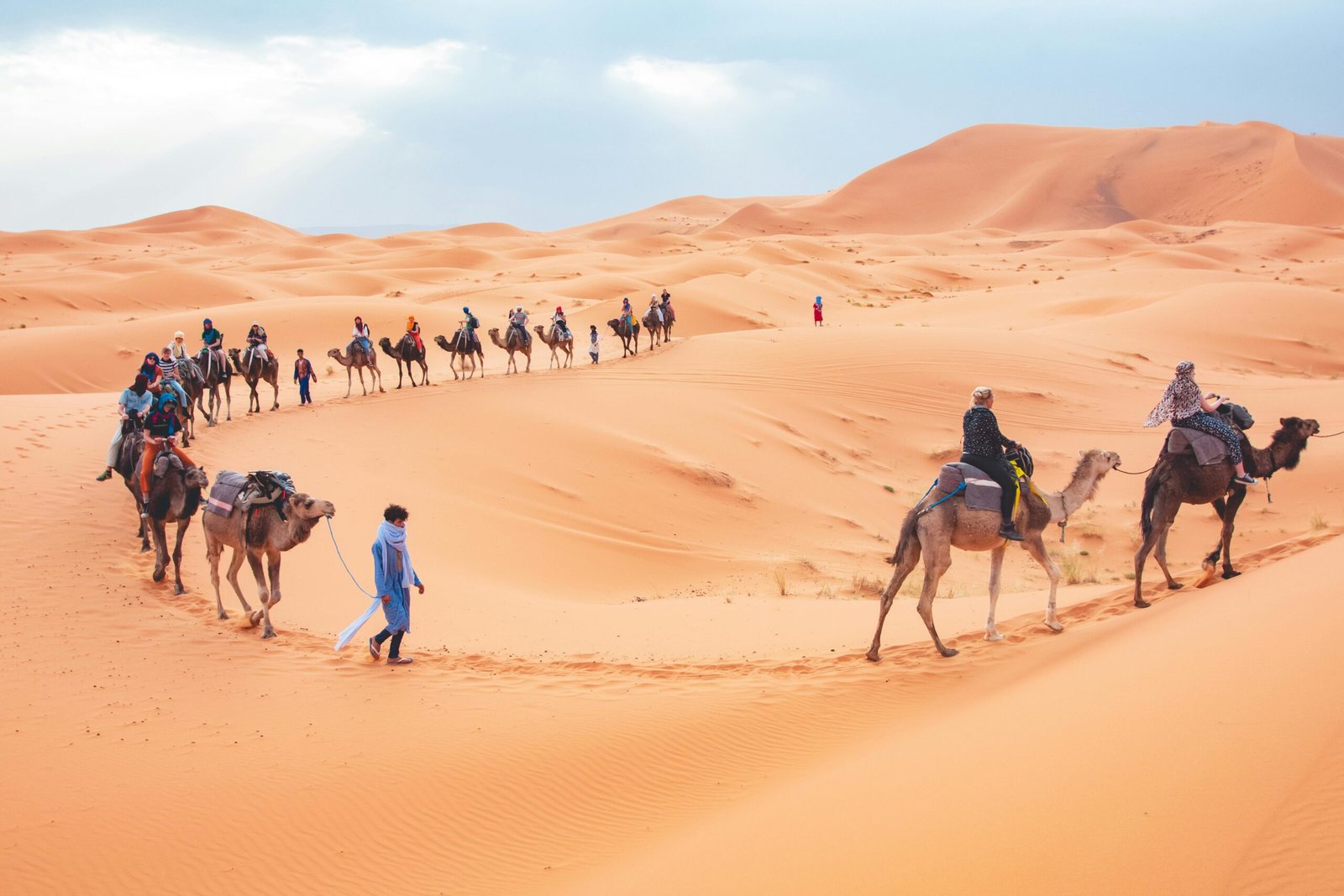
- Sunset and Sunrise Camel Treks: Riding dromedaries across the undulating ridgelines as the sand shifts from bright gold to deep terracotta and violet.
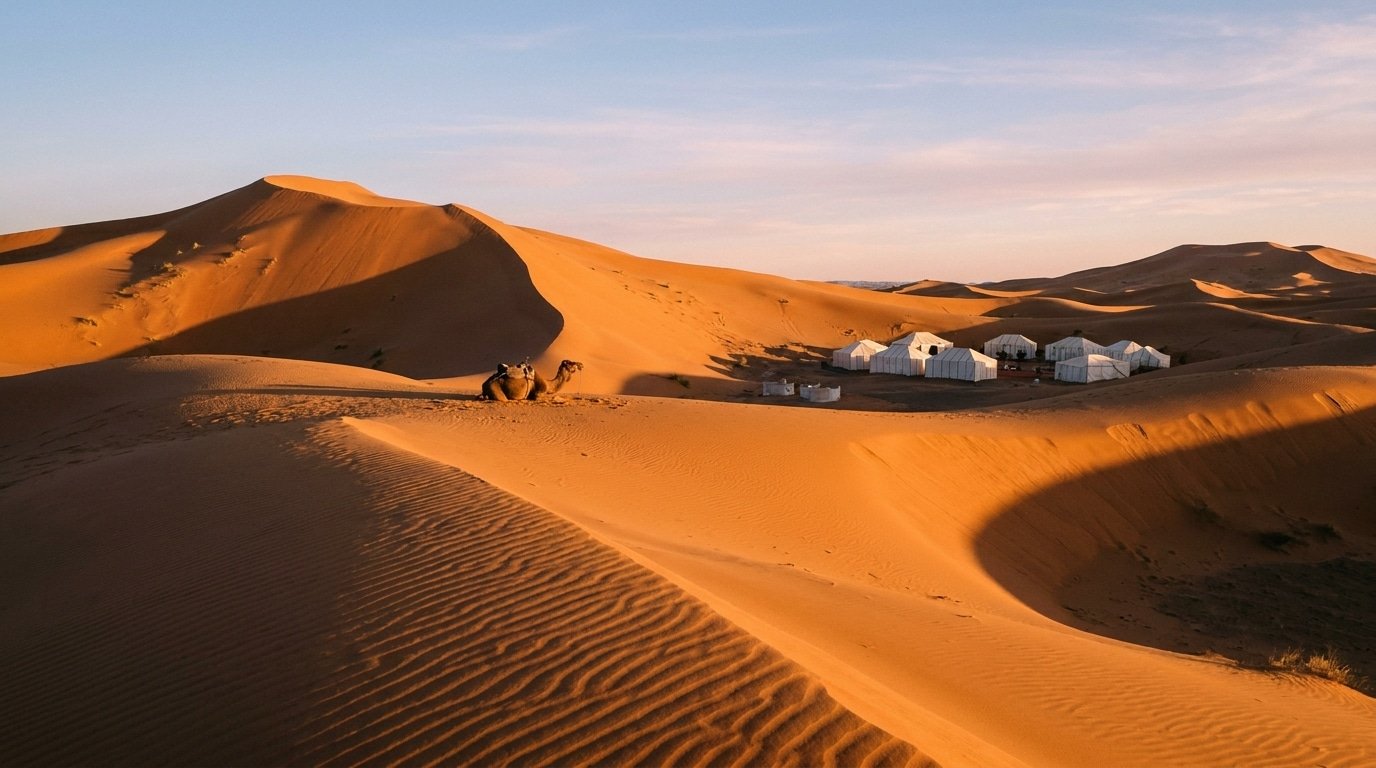
- Desert Glamping: Spending the night in merzouga luxury desert camps that combine private canvas suites, plush bedding, private en-suite bathrooms, and solar-powered electricity with open campfires and traditional music.
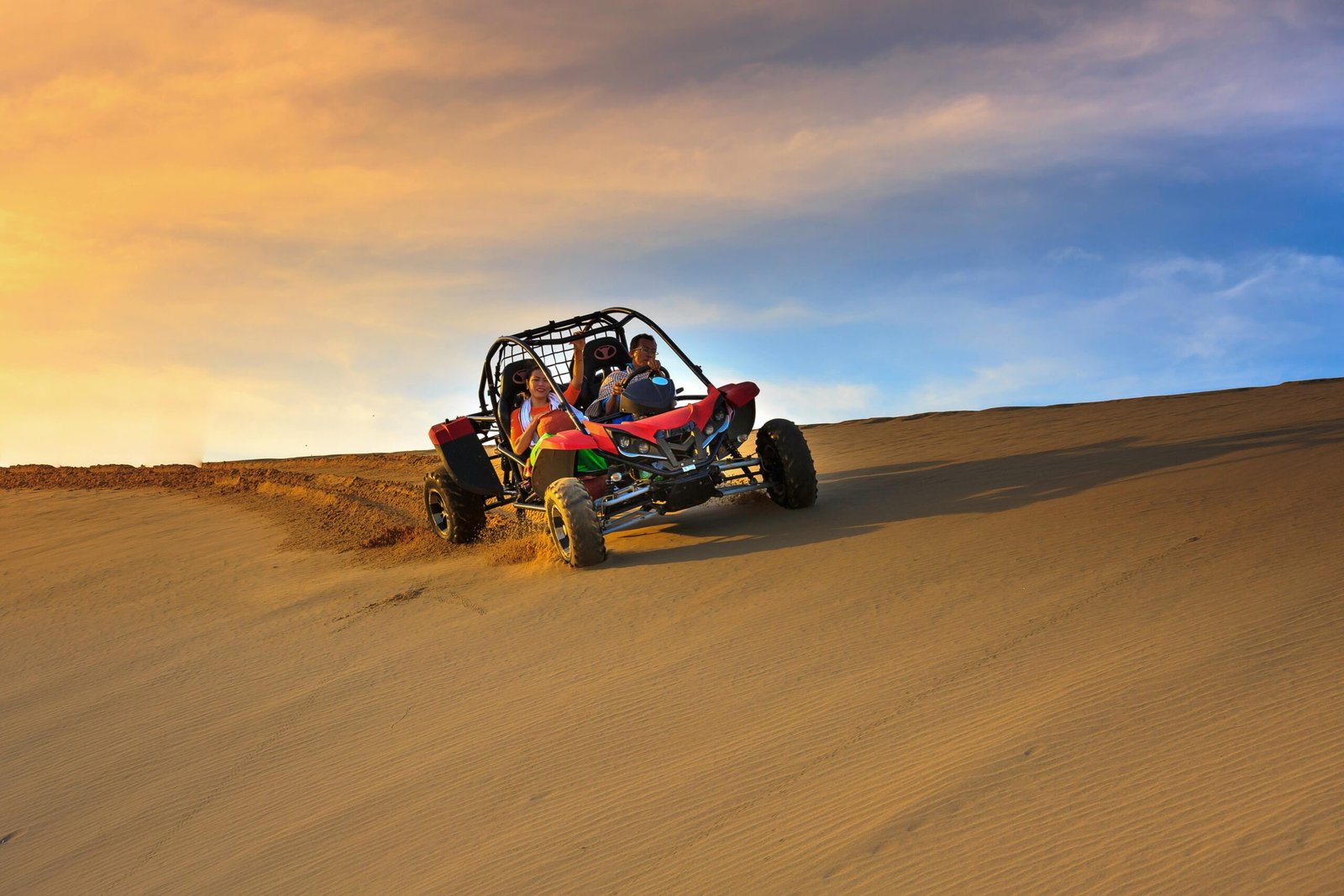
- 4×4 Dune Exploration: Traversing the expansive perimeter of the dunes to visit ancient lead mines at M’Fis and remote nomadic settlements across the black stone desert.
- Gnawa Music in Khamlia: Visiting the nearby village of Khamlia to listen to spiritual desert rhythms played by musicians whose ancestral roots trace back to sub-Saharan Africa.
The Untamed Nature and Landscapes of the merzouga desert
The merzouga desert is defined by Erg Chebbi, a unique geological formation that spans roughly 28 kilometres from north to south and extends up to 7 kilometres wide. The iconic Merzouga dunes are composed of fine quartz sand that has accumulated over thousands of years, sculpted into sharp crests by prevailing Saharan winds.
Unique Ecosystems and Wildlife
Despite its arid conditions, the merzouga desert supports a surprisingly resilient ecosystem. The sand absorbs and retains moisture from sparse flash rains, creating micro-habitats that sustain specialized desert flora and fauna:
- Desert Flora: Scattered acacia trees, resilient tamarisk shrubs, and hardy desert gourds (Citrullus colocynthis) thrive along the edges of dry riverbeds (wadis).
- Mammals and Reptiles: Wildlife watchers can spot nocturnal fennec foxes (Vulpes zerda), sand cats, desert hedgehogs, and several species of geckos and fringe-toed lizards adapted to moving across hot, loose sand.
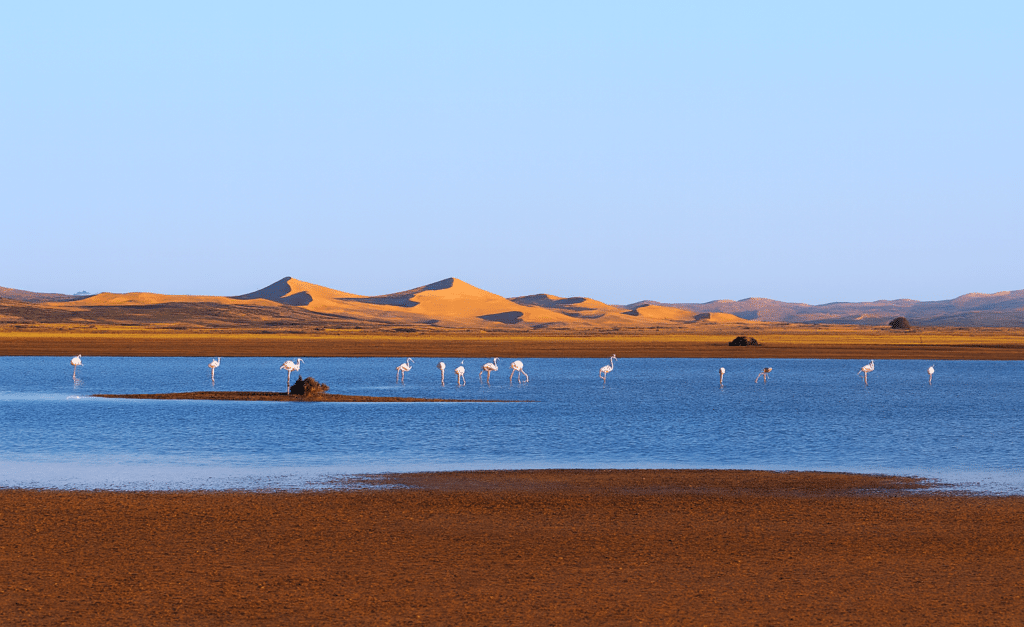
- Dayet Srij (Flamingo Lake): Following winter rains, a seasonal salt lake forms just west of the village. This temporary wetland attracts thousands of migrating flamingos, shelducks, and storks, creating an incredible contrast of pink birds against golden sand dunes.
Geographical Cross-Section of Merzouga
The stark transition from wetland, to sand sea, to volcanic rock.
The stark transition between the soft sand sea and the surrounding hamada (rocky desert pavement) provides an extraordinary terrain for landscape photographers. While the dunes shift and reform with each seasonal wind, the underlying bedrock anchors ancient fossil beds rich in ammonites and trilobites dating back hundreds of millions of years.
Seasonal Guide: What to Expect from merzouga weather
Understanding merzouga weather is the most critical element of planning your desert itinerary. The climate is hyper-arid and continental, characterised by extreme temperature variations between seasons and dramatic shifts between day and night.
| Season | Months | Daytime Average | Nighttime Average | Wind / Rain Conditions | Recommended For |
| Spring | Mar – May | 24°C – 32°C | 12°C – 18°C | Occasional spring breezes / Sirocco | Moderate hiking, photography |
| Summer | Jun – Aug | 38°C – 44°C | 25°C – 30°C | Dry, scorching heat, rare dust storms | Budget travel, low crowds |
| Autumn | Sep – Nov | 26°C – 34°C | 14°C – 20°C | Clear skies, very low rainfall | Prime desert trekking, glamping |
| Winter | Dec – Feb | 16°C – 21°C | 0°C – 6°C | Crisp, clear air, frosty nights | Stargazing, cool-weather hikes |
Spring and Autumn: The Prime Travel Windows
The shoulder seasons of spring (March to May) and autumn (September to November) offer the most comfortable merzouga weather. Daytime temperatures remain warm and pleasant without reaching dangerous heat levels, making open-air activities across the Merzouga dunes enjoyable throughout the afternoon. Evenings are pleasantly cool, perfect for gathering around outdoor campfires without requiring heavy winter expedition coats.
Winter: Crisp Days and Freezing Nights
During the winter months (December to February), the daytime sun remains bright and mild, rarely exceeding 20°C. However, the lack of cloud cover causes surface heat to radiate rapidly into space once the sun sets. Nighttime temperatures in the merzouga desert regularly drop below freezing (0°C to 4°C). Visitors staying in standard tents must pack thermal base layers and heavy socks, though modern merzouga luxury desert camps often mitigate this with insulated canvas suites and space heaters.
Summer: Extreme Saharan Heat
Summer (June to August) brings severe, unforgiving desert conditions. Midday highs frequently surpass 42°C (108°F), rendering outdoor activities dangerous between 11:00 AM and 5:00 PM. Camel trekking and dune tours are restricted to early sunrise and late twilight hours. While budget travellers can find discounted accommodation rates during these months, the intense heat can be physically taxing for those unaccustomed to desert climates.
Exploring the Rocky Plains of zagora morocco and the zagora desert
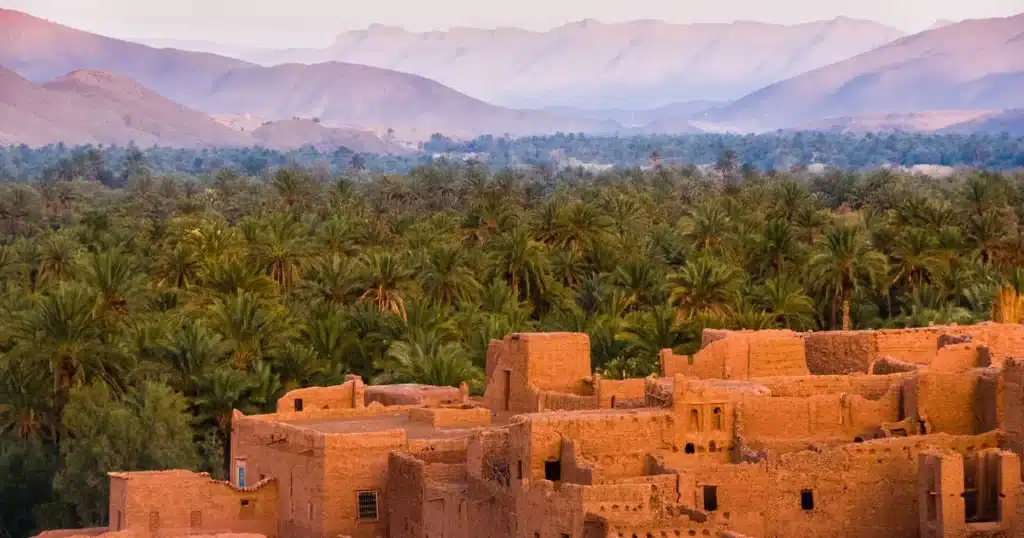
When exploring travel itineraries departing from Marrakech, many visitors encounter options leading south to zagora morocco. Positioned along the scenic Draa Valley, this historical oasis town has long served as a vital trading post on ancient trans-Saharan caravan routes, famously marked by the legendary sign reading “Timbuktu, 52 Days” by camel.
🌴 Zagora Snapshot
- Region:Draa River Valley (Southern Morocco)
- From Marrakech:~360 km (6–7 hours drive)
- Terrain Type:Rocky plateau (Reg) with low dunes
- Key Landscapes:Extensive date palm oases & mud kasbahs
- Ideal Trip Length:2 Days / 1 Night
The surrounding zagora desert presents a starkly different landscape than the towering sand mountains found further east. The environment here is predominantly a reg—a flat, stone-strewn desert plateau composed of dark volcanic rock, gravel plains, and low, undulating sand mounds rather than grand sand seas.
Key cultural and geographical highlights of zagora morocco include:
- The Draa Valley Oasis: A stunning, 200-kilometre corridor lined with millions of date palms and fortified mud-brick kasbahs (such as Kasbah Tamnougalt).
- Tamegroute Village: Located just south of Zagora, this historic religious centre is renowned for its 17th-century Quranic library housing ancient manuscripts on gazelle parchment, as well as traditional green-glaze pottery workshops.
- Accessible Short Tours: Because it sits roughly 200 kilometres closer to Marrakech than Merzouga, the zagora desert is the primary destination for rapid 2-day / 1-night desert excursions.
merzouga vs zagora desert which is better?
Choosing between the sweeping sand mountains of Merzouga and the rocky plateaus of Zagora is one of the most common dilemmas for travellers planning a Moroccan holiday. Both destinations offer genuine Saharan culture, but their landscapes, driving requirements, and overall atmospheres differ fundamentally.
| Feature / Metric | merzouga morocco (Erg Chebbi) | zagora morocco (Draa Valley) |
| Landscape Type | Colossal golden sand dunes (Erg) up to 150m high | Flat, rocky stone desert (Reg) with modest sand mounds |
| Driving Distance (from Marrakech) | ~560 km (9–10 hours each way) | ~360 km (6–7 hours each way) |
| Recommended Minimum Time | 3 to 4 Days (2 nights minimum) | 2 Days (1 night) |
| Dune Immersion Quality | 10/10 – Authentic, towering sand sea | 5/10 – Sparse, low dunes in a rocky valley |
| Scenic En-Route Waypoints | Dades Gorge, Todra Gorge, Ait Benhaddou | Draa Valley Palm Oases, Ait Benhaddou, Tamegroute |
| Camp & Luxury Options | World-class merzouga luxury desert camps | Standard to mid-range desert camps |
Navigating the Southern Desert Routes
(Erg Chebbi Dunes)
(Stone Desert Reg)
Why Choose Merzouga: The Ultimate Sahara Experience
If your vision of Morocco includes vast, postcard-perfect orange sand dunes stretching endlessly into the distance, merzouga morocco is undeniably the better choice. The sheer scale of the Merzouga dunes provides a truly immersive wilderness feeling that cannot be replicated on the flat plains of Zagora. Sliding down massive sand faces, trekking over pristine dune crests, and staying in secluded luxury canvas suites make the extra transit hours completely worthwhile.
Why Choose Zagora: The Time-Sensitive Solution
The zagora desert is better suited for travellers who are strictly limited to a short 2-day holiday window and cannot commit to the 20-hour round-trip journey required for Merzouga. While the sand dunes in Zagora are small and interspersed with gravel, the route passes through the magnificent palm groves of the Draa Valley and allows you to experience a desert sunset, a short camel ride, and a night in a Berber tent without excessive driving fatigue.
For travellers with three or more days to spare, investing the extra travel time to visit the merzouga desert delivers a vastly superior, authentic Saharan adventure.
A journey to the southern Moroccan desert delivers an extraordinary contrast of geological drama and ancient tradition. Whether you choose to cross the High Atlas towards the colossal dunes of Erg Chebbi or traverse the lush date-palm oases of the Draa Valley, experiencing the stillness of the Saharan night sky is an unforgettable travel milestone. By planning around seasonal temperature shifts, preparing for cold desert nights, and selecting the terrain that matches your holiday timeline, your Moroccan desert expedition will stand out as the definitive highlight of your travels.
Frequently Asked Questions
What is the best month to visit Merzouga?
The best months to visit Merzouga are October, November, March, and April. During these autumn and spring windows, daytime temperatures remain comfortably warm (22°C to 28°C) without the extreme summer heat, and evening temperatures remain pleasant for stargazing and campfires around the dunes.
How many days do you need in Merzouga?
You need a minimum of three days and two nights for a round trip to Merzouga from Marrakech. Because the one-way driving time exceeds nine hours, spending at least two full nights in the region ensures you have adequate time to enjoy camel trekking, 4×4 dune tours, and desert camp life without spending the entire holiday in transit.
Can you drive a standard rental car to Merzouga?
You can comfortably drive a standard 2WD rental car to Merzouga because the main roads from Marrakech and Fez are fully paved and well-maintained. However, driving off-road into the sand dunes or reaching remote desert camps requires a 4×4 vehicle or pre-arranged transfer with your camp operator.
Ready to stand atop the golden dunes of the Sahara? Explore our comprehensive itineraries and secure your spot at a luxury desert camp in Merzouga today to experience an unforgettable Moroccan adventure under the stars.